The Training Revolution: 5 Ways Serious Games and Simulations are Solving the Workforce Skills Gap
We’ve all been there: sitting in a sterile conference room or clicking through a monotonous slide deck, wondering how any of these "theories" actually applies to the high-pressure reality of our daily jobs. For many adult learners, especially those balancing work-life demands, traditional training programs don't stick. The abstract nature of classroom learning often fails to bridge the gap between knowing a concept and executing it under fire.
But what if you could practice high-stakes decision-making in a "low risk environment" where mistakes were the best teachers? Sign me up, right! Where do I find this magic circle of mistakes that helps me grow without risk?
From virtual reality (VR) simulations to interprofessional tabletop exercises, serious games are transforming workforce development by turning passive observers into active participants. Here are the most meaningful takeaways from the latest research on why simulation-based training is the future of work.

Context is King: The Power of Contextualized Learning
Traditional training often treats remedial or basic skills as prerequisites for "real" occupational training, which can lead to learner discouragement and high attrition. Contextualized Teaching and Learning (CTL) flips this script by blending basic skills and occupational training in environments that mirror real-world situations.
This isn't just about making learning more fun; it’s about making it effective. When students can relate subject matter to their actual experiences, learning outcomes skyrocket. In one study, students in CTL programs achieved a 55% credentialing rate, compared to 20% in traditional programs.

Mastering the "Learn-Apply-Reflect" Cycle
Learning is not a linear event; it is a cycle. Drawing on Kolb’s Experiential Learning Theory, practical simulations move learners through four distinct stages: concrete experience, reflective observation, abstract conceptualization, and active experimentation.
In a business setting, this means moving beyond the lecture hall. For example, when a major telecommunications company needed to upskill domain experts in AI and Machine Learning, they utilized a "learn-ideate-apply-reflect" model. By applying classroom concepts to real business projects and receiving immediate feedback, employees didn't just memorize algorithms; they developed a "digital mindset". This iterative approach fosters "double-loop learning," in which learners are encouraged to question entrenched assumptions and explore novel solutions.
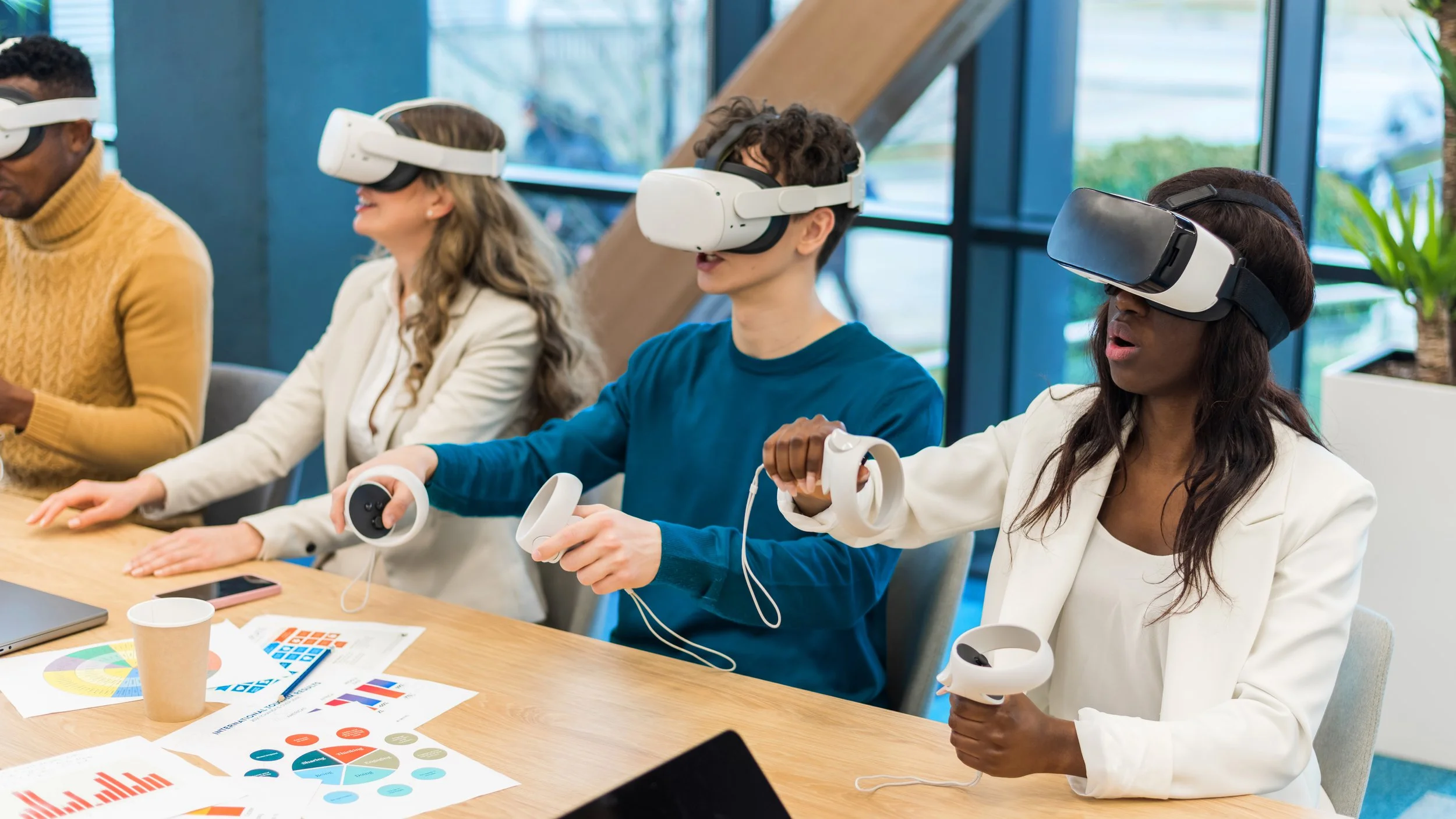
Building "Career Adaptability" Through VR
In today’s unpredictable labor market, specific technical skills can become obsolete quickly. Therefore, the most valuable trait an employee can have is career adaptability, the capacity to navigate transitions and adjust to emerging challenges.
Immersive VR training has proven significantly more effective than traditional methods at enhancing this adaptability. Because VR provides a sensory-rich, multi-dimensional experience, learners can "step into" a profession and practice problem-solving under pressure without any real-world risk. Research shows that VR training significantly improves a learner's self-appraisal and goal-setting efficiency, giving them the confidence to make informed career decisions in uncertain environments.
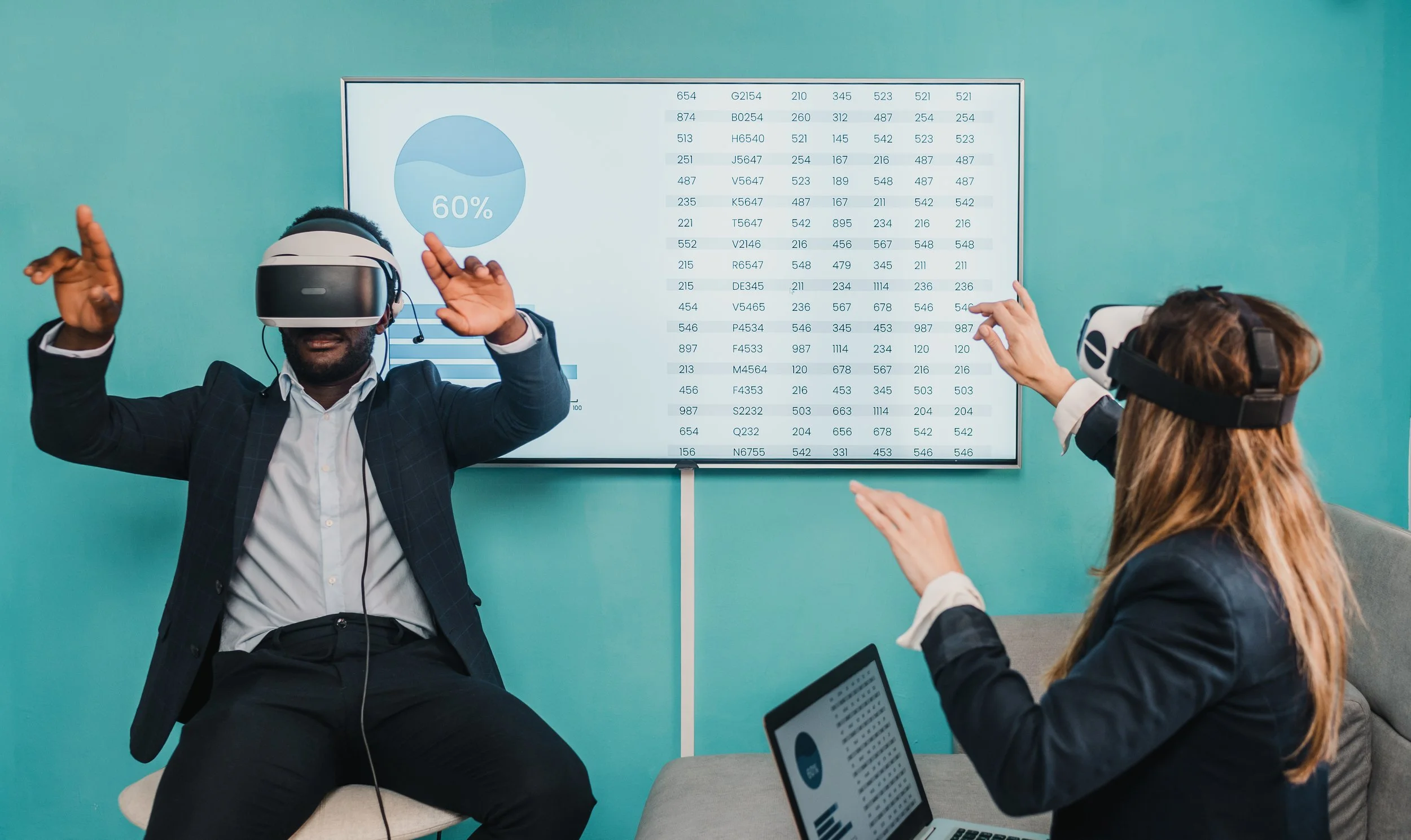
Breaking Silos with Interprofessional Simulations
In the real world, no department is an island. Yet, most training happens in silos. Interprofessional Education (IPE) through simulations, such as "tabletop exercises," brings different disciplines together to solve complex, hypothetical emergencies.
By forcing diverse groups to collaborate on a unified response, these simulations promote clarity of roles and communication. These exercises reveal the "hidden curriculum,” the unspoken and unwritten rules of professional life, helping new hires and seasoned pros alike understand how their pieces fit into the larger organizational puzzle.

Closing the Gap for Nontraditional Learners
Simulation-based training is a massive win for diversity and inclusion. Digital instruction and CTL have proven particularly effective for women, minorities, veterans, and older adult learners who may have been out of a structured learning environment for years.
Because these simulations can be online and modular, they provide flexible "on-ramps" and "off-ramps" for students who need to balance education with work-life demands. When training is immersive and experiential, underrepresented groups often achieve higher credentialing rates, effectively narrowing the skills gap in technical industries such as manufacturing and STEM.
The Future of Learning is Experiential
The evidence is clear: the most effective way to prepare a workforce for the "dynamic world in which they live and work" is to stop talking at them and start involving them. Whether through a 4D game, a VR headset, or a collaborative tabletop exercise, simulations provide the engagement, feedback, and real-world context that traditional lectures just can’t.
As institutional leaders and business owners, we must view these experiential tools not just as "games," but as a critical investment in workforce development.
A final thought to ponder: If your current training program were a simulation, would your employees survive the first round, or are you preparing them for a world that no longer exists?